Knowing how to choose an electric bike comes down to checking eight things before you pay: battery capacity and range, motor power and speed assist, water resistance, battery management system (BMS), smart connectivity, display quality, frame fit, and certifications. Get these right and the bike will hold up to daily use for years. Skip them, and you're likely paying for a bike that looks capable on a spec sheet but fails in real-world conditions.
Below is a breakdown of each factor, what to look for, and how the NINE09 lineup (the CX01 and CX02) measures up against it.
1. Battery Capacity and Real-World Range
Check the range across every assist mode, not just the best-case figure on the box. Battery capacity is measured in watt-hours (Wh). A 374Wh pack is a solid mid-range figure for daily commuting, but the advertised range typically assumes flat terrain, a light rider, and the lowest assist mode.
NINE09's lineup runs on a 374Wh swappable battery rated for up to 99 km in ECO mode, dropping to roughly 55 to 70 km in TOUR mode and 25 to 40 km in TURBO mode, a realistic spread rather than a single inflated headline number. For a full breakdown of how assist mode, terrain, and rider weight affect real-world numbers, see our electric bike battery and range guide.
2. Motor Power and Speed Assist Limit
Confirm the motor's assist cut-off speed, not just its wattage. In the EU and UK, pedelecs must cap motor assistance at 25 km/h under the EN15194 standard for electrically power-assisted cycles. Anything advertised beyond that isn't road-legal without separate registration.
A 250W motor is enough for most urban and suburban riding, including moderate inclines. Both NINE09 models use exactly that: a 250W motor with assistance capped at 25 km/h, keeping the CX01 and CX02 fully EN15194 compliant for EU and UK roads.
3. Water and Weather Resistance (IP Rating)
Ask for the IP (Ingress Protection) rating on both the battery and the display, since they're often rated differently. IPX5 protects against water jets from any direction; IPX7 means a component can survive full immersion up to one metre for 30 minutes. A bike with a low or unlisted IP rating can suffer battery corrosion after just one season of regular riding.
On the NINE09 side, the swappable battery pack carries an IPX7 rating, and the display is rated IPX5, so daily rain exposure isn't a design risk. If you're weighing a removable battery specifically, our swappable battery buying guide covers what to check beyond just the IP rating.
4. Battery Management System (BMS) and Safety
Ask whether the BMS is passive or active. A Smart BMS is the difference between a battery that degrades in six months and one that still performs well after two years. It continuously monitors cell temperature, voltage, and charge state, preventing overcharging, deep discharge, and thermal runaway, the three most common causes of premature battery failure.
Every battery pack in the NINE09 range comes with an active Smart BMS built in, paired with UN38.3 certification, confirming it has passed international transport and safety testing.
5. Smart Connectivity: App, GPS, and Security
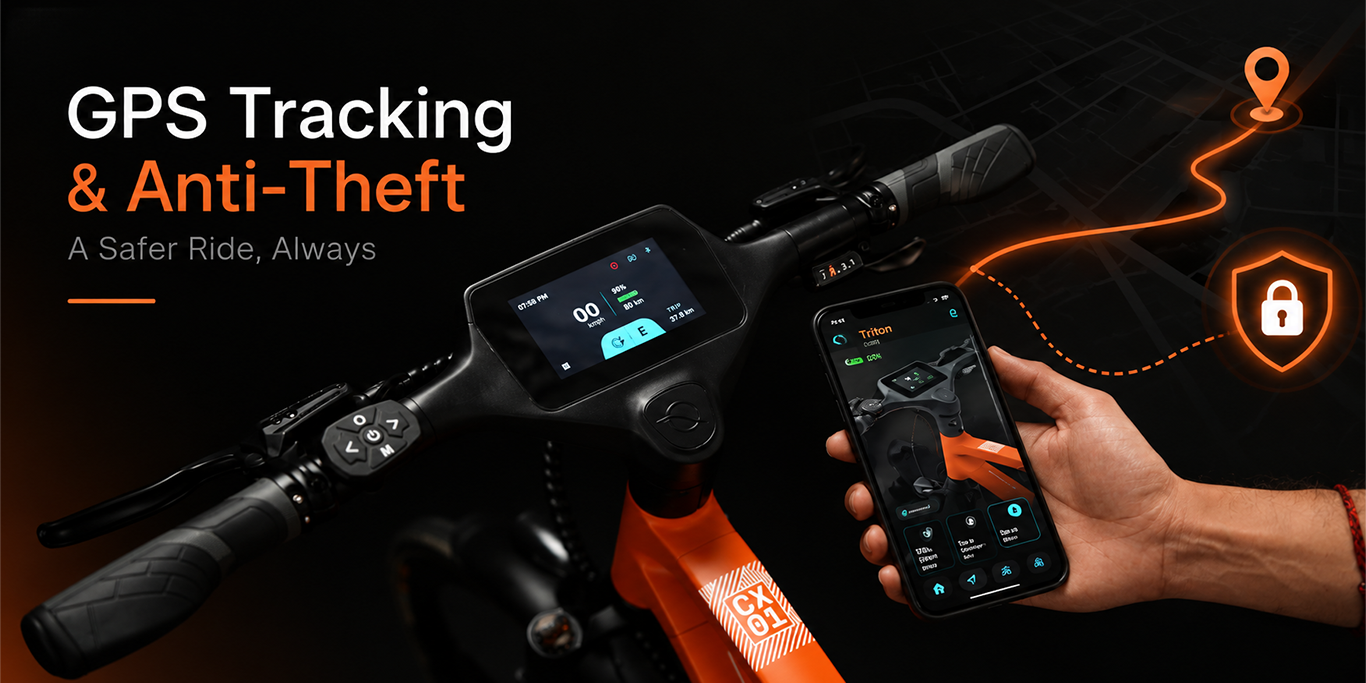
Look for GPS tracking, remote lock, and over-the-air (OTA) update support. These features solve real problems like theft prevention and post-purchase software fixes, not just marketing checkboxes. OTA capability specifically means the manufacturer can improve battery efficiency and patch issues after you've already bought the bike.
On this front, both NINE09 models pair with the NINE09 app for live GPS location, remote battery lock, real-time range estimation, and OTA updates, aimed at commuters who park in shared or unmonitored spaces. See our full breakdown of CX01/CX02 smart features for how each one works in practice.
6. Display and Ride Data
A proper display should show assist mode, trip distance, estimated remaining range, and connectivity status at a glance, not just speed and battery percentage. This information changes how you ride, especially on longer trips where switching assist modes mid-route extends your range.
NINE09 models include a 4.3-inch LCD touchscreen (IPX5 rated), giving full visibility into ride data without needing to pull out a phone at a red light.
7. Frame Type and Fit
Decide between a step-over (high-step) and step-through (low-step) frame based on how often you stop and start. A step-over frame suits a sportier, more traditional riding position. A step-through frame is easier to mount and dismount at frequent stops or traffic lights.
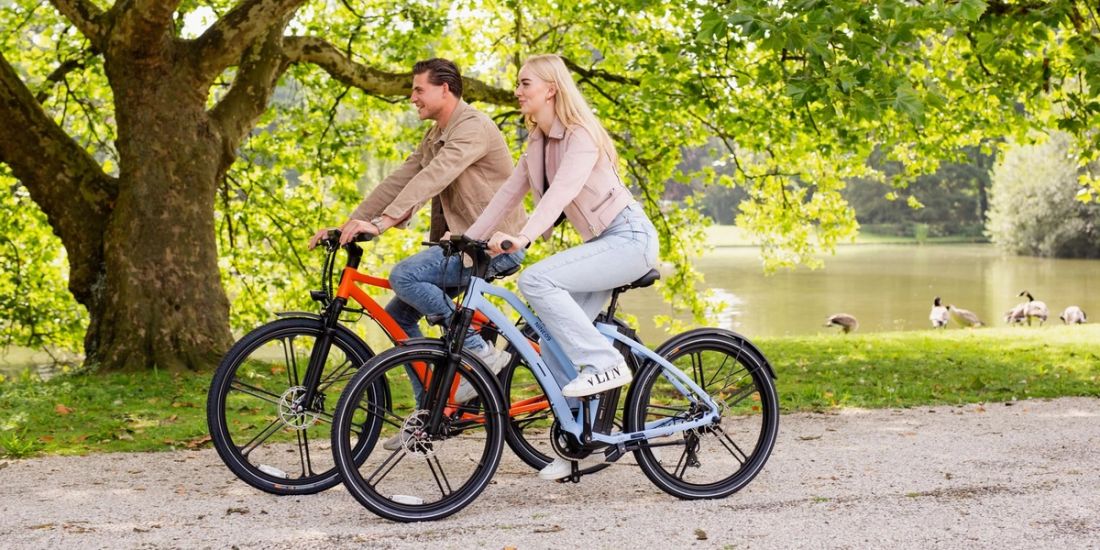
This is exactly where NINE09 splits its lineup in two: the CX01 is a step-over frame for a sportier feel, and the CX02 is a step-through frame for easier city riding. Everything else, including battery, motor, display, and smart features, stays identical between them. For a deeper comparison, see Step-Through vs. Step-Over eBikes.
8. Certifications and Warranty
Check for CE certification and UN38.3 battery certification at minimum. These confirm independent testing rather than manufacturer claims. Then check the warranty terms specifically on the battery, since it degrades faster than any other component and is the most expensive part to replace.
NINE09 checks both boxes here, with CE and UN38.3 battery certification, and backs it with a 2-year warranty on the battery and electronics. The swappable design means that if anything does need replacing down the line, it's the battery pack, not the bike.
Choose an eBike That Fits Your Needs
Choosing the right electric bike comes down to checking eight things: battery capacity and range, motor power and speed compliance, water resistance, BMS quality, smart connectivity, display capability, frame fit, and certifications. Each one has a direct, measurable effect on daily usability and how long the bike lasts.
The CX01 and CX02 are built to meet every point on this checklist, with the only real difference between them coming down to frame style. Get in touch with the NINE09 team for guidance.
Sources & Standards Referenced: EN15194 (European standard for electrically power-assisted cycles), UN38.3 (UN Manual of Tests and Criteria for lithium battery transport safety), IPX5/IPX7 (IEC 60529 ingress protection ratings).
Frequently Asked Questions
How do I choose an electric bike for daily commuting?
Prioritize battery range for your actual commute distance (not the maximum advertised figure), an IPX-rated battery for weather resistance, and a Smart BMS for long-term reliability. Frame type should match how often you stop and start in traffic.
What is the most important spec to check before buying an e-bike?
Battery capacity and range matter most for usability, but a Smart BMS is what determines whether that battery still performs well in year two. Both deserve equal attention.
Is a higher watt motor always better for an eBike?
Not necessarily. In the EU and UK, assistance is capped at 25 km/h regardless of motor wattage under EN15194. A 250W motor is sufficient for most urban and suburban terrain; higher wattage mainly helps with steep inclines or heavier loads.
What does IPX7 mean for an e-bike battery?
It means the battery can withstand full immersion in water up to one metre deep for 30 minutes, making it safe for regular riding in rain without risking corrosion or failure.
What's the difference between the NINE09 CX01 and CX02 ebike?
The CX01 has a step-over frame for a sportier ride; the CX02 has a step-through frame for easier mounting. Battery, motor, display, and smart features are identical on both.
Do I need app connectivity on an e-bike?
It's not mandatory, but GPS tracking and remote lock meaningfully reduce theft risk for bikes parked outdoors or in shared spaces, and real-time range data helps with route planning.
What certifications should an e-bike battery have?
At minimum, CE certification for general product safety and UN38.3 for battery transport and safety testing. These confirm independent verification rather than manufacturer self-reporting.