An eBike battery management system (BMS) is an electronic circuit inside an electric bike battery that monitors every cell and protects the pack. It tracks voltage, current and temperature, cuts power when something goes outside safe limits and balances the cells, so they age evenly. A good BMS makes charging safer, helps the battery last longer and keeps range more predictable.
If you have read an eBike spec sheet recently, you have probably seen "BMS" or "Smart BMS" listed next to battery capacity. It is easy to skip the past, but the BMS decides how safely and how long your battery will work. This guide explains BMS, what it does, why smart battery technology matters, and what to check before you buy. For a wider look at how eBike batteries work, see the NINE09 electric bike battery guide.
What Does a Battery Management System Do?
An eBike battery is not one big battery. It is a pack of many small lithium-ion cells wired together. Each cell has a safe operating window. If one cell is pushed too high, drained too low, overheated or overloaded, it can lose capacity quickly or become unsafe.
The BMS sits between those cells and the rest of the eBike. It works like a supervisor that never switches off. Its core jobs are:
Monitoring: reading cell voltage, current flow and temperature in real time.
Protecting: disconnecting the battery when readings move outside safe limits.
Balancing: keeping all cells at a similar charge level so no single cell wears out first.
Estimating: calculating the remaining charge so the eBike can show an accurate battery level.
Communicating: sending battery data to the eBike system.
The Main BMS Protections, Explained
Most eBike battery management systems use a similar set of protections. Here is what each one does and what it means for you as a rider.
| BMS Function | What It Does | What It Means for the Rider |
| Overcharge protection | Stop charging when cells reach their upper voltage limit | Lower risk when the battery is left on the charger |
| Under-voltage (over-discharge) protection | Cuts output before cells drain too low | Helps prevent permanent capacity loss from deep discharge |
| Over-current protection | Limits current if the load becomes too high | Protects cells and wiring during hard acceleration or steep climbs |
| Short-circuit protection | Disconnects the battery instantly if a short is detected | Reduces the risk of damage or overheating from a wiring fault |
| Thermal protection | Watches cell temperature and limits charging or output when it is too hot or too cold | Safer charging and riding in summer heat or winter cold |
| Cell balancing | Evens out the charge between cells | Longer battery life and more usable capacity |
These protections usually work in the background. When one activates, the BMS responds in proportion to the situation, pausing charging, pausing output or safely shutting the system down, then returns to normal once conditions are safe.
Why Cell Balancing Matters for Battery Life
Cell balancing is the BMS function riders hear about least, yet it has a large effect on long-term ownership.
No two cells are perfectly identical. Over hundreds of charges, small differences grow. Without balancing, the weakest cell reaches empty first and the strongest reaches full first, so the pack can only use the capacity of its weakest cell. The battery feels like it is losing range faster than it should.
A BMS with cell balancing keeps the cells closer together. That means more of the battery's rated capacity stays usable, and the pack ages more evenly. Good charging habits support this too. The NINE09 guide to charging your eBike battery safely covers simple routines that help any battery last longer.
Basic BMS vs Smart BMS: What Is the Difference?
Every lithium-ion eBike battery should have a BMS. The difference is how much the system can tell you.
| Feature | Basic BMS | Smart BMS |
| Core protections (voltage, current, short circuit, temperature) | Yes | Yes |
| Cell balancing | Often limited | Usually included |
| Battery level shown to rider | Simple estimate | More detailed information |
| Battery health information | Rarely | Battery health monitoring |
| Error reporting | Power cut with little explanation | Error indication the rider can see |
A basic BMS protects the battery silently. A Smart BMS does the same protective work, then shares what it knows. That is the core idea behind smart battery technology: the battery does not just protect itself, it helps you understand its condition.
For daily commuters, this visibility is practical. You can see battery health before a long ride, spot a problem early instead of discovering it on the road, and plan charging around real information rather than guesswork.
How the NINE09 Smart BMS Works
The NINE09 CX01 Step Over eBike and the NINE09 CX02 Step Through eBike share the same Swappable Battery with Smart BMS. NINE09 describes it as "Smarter Power Management." According to the current CX01 and CX02 specifications, the 10.4Ah / 374Wh swappable battery uses lithium-ion cylindrical cells, carries an IPX7 water resistance rating and lists the following features.
BMS safety features:
• Thermal variation protection
• Over-current protection
• Under-voltage protection
• Short-circuit protection
BMS features:
• Communication with the eBike system
• Battery Level Indication on body
• Critical error indication through the battery level indicator on the battery
• Cell balancing for enhanced efficiency
• Battery Health Monitoring
The included charger adds its own layer of protection. NINE09 lists Trickle, CC, CV with auto-switching charging modes, plus thermal protection, over-current protection, over-voltage protection, short-circuit protection and an anti-backflow function. In simple terms, the battery's Smart BMS and the charger work together to manage the charge from start to finish.
The battery level indicator on the battery body shows the charge level and alerts you to any critical error, so you can check the battery's status even when it is out of the eBike, for example while charging it at home or in the office. The NINE09 Smart BMS responds to each situation according to how critical it is, pausing charging, pausing discharge or safely shutting the system down to keep the battery and rider protected.
How the NINE09 Smart BMS Works With the eBike System
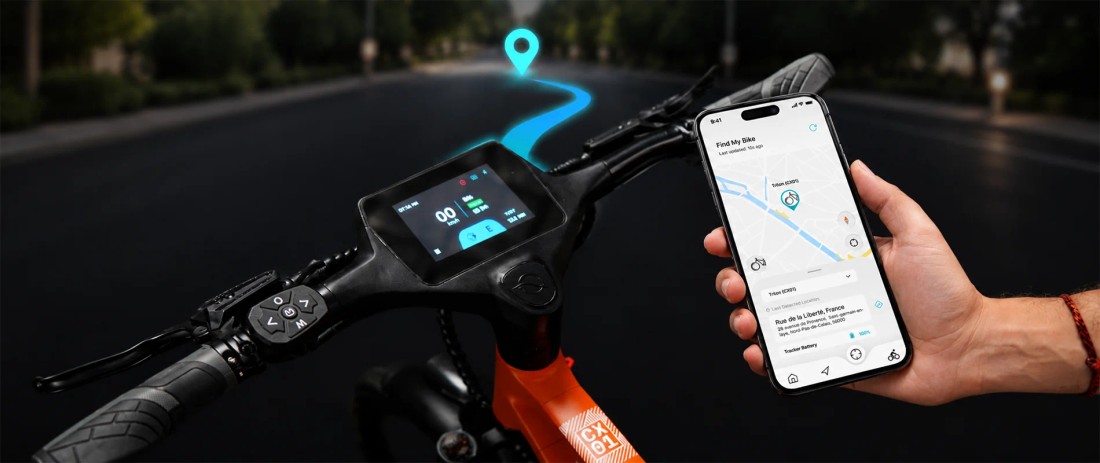
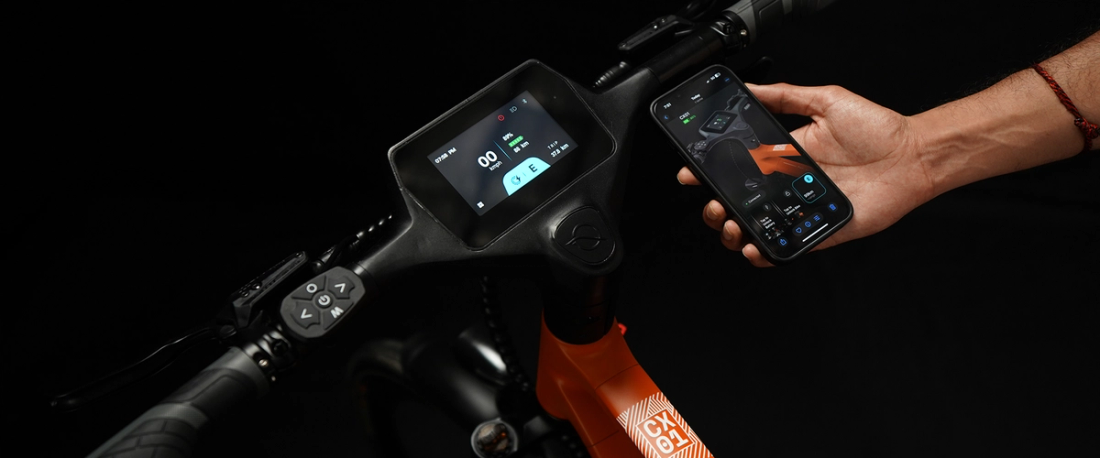
The NINE09 Smart BMS works directly with the eBike system, sending it a steady stream of battery data. The eBike system turns this data into clear information for the rider, such as the battery level and the remaining range, which is calculated from the voltage data the BMS provides.
Real-world range also depends on conditions such as rider weight, terrain, wind, temperature, assist level and tyre pressure. Because the range figure is calculated from battery voltage, it gives you a clear, consistent reference for planning each ride. The article How Far Can an Electric Bike Really Go? explains these variables in more detail.
What to Check in an eBike BMS Before You Buy
Most brands simply say "BMS included," which tells you very little. Use this checklist when comparing eBikes:
Listed protections: Look for over-current, under-voltage, short-circuit and thermal protection named on the spec sheet.
Cell balancing: Check whether the battery balances its cells. This affects long-term capacity.
Battery health information: Find out whether you can see battery health, not only the charge level.
Error feedback: Ask how the battery tells you when something is wrong.
Data sharing: If you want smart battery technology, check what battery data the eBike system receives from the BMS and how it is shown to you.
Charger protections: The charger matters too. Check which protections and charging modes it lists.
Certification: Look for recognised battery certifications. NINE09 states that its battery is UN38.3 certified for safe transport.
If you are comparing several eBikes at once, the NINE09 eBike buying guide covers the battery alongside the motor, safety and smart features.
Common Misunderstandings About eBike BMS
"A BMS means I can ignore charging habits." A BMS stops unsafe conditions, but it does not stop normal ageing. Storing a battery fully charged for long periods or charging it in extreme heat can still shorten its life.
"A sudden power cut means the battery is broken." Often it is the BMS doing its job, for example under-voltage protection on a nearly empty battery or thermal protection on a very hot day. Check the battery level and error indication before assuming a fault.
"All BMS systems are the same." Every BMS protects the battery, but they differ in balancing, data and communication. Those differences show up over years of ownership.
Choosing Between the CX01 and CX02
Both models use the same Swappable Battery with Smart BMS, so you get the same battery protection whichever you choose. That leaves you free to choose by frame style. The CX01 Step Over eBike suits riders who prefer conventional geometry. The CX02 Step Through eBike suits riders who want easier mounting and dismounting, for example in stop-and-go city traffic or when riding in everyday clothes.
The BMS Is the Part of the Battery You Never See, but Always Rely On
The battery management system is what turns a pack of lithium-ion cells into a battery you can trust every day. It protects against unsafe voltage, current and temperature, balances the cells for longer life and, on a Smart BMS, tells you what is happening inside the battery. When you compare eBikes, look past the capacity figure and ask what the BMS actually does. To see every NINE09 model side by side, explore the NINE09 catalogue.
Want a battery that tells you how it is doing? The NINE09 CX01 and CX02 both use a Swappable Battery with Smart BMS, Battery Health Monitoring and communication with the eBike system. Explore the NINE09 CX01 and CX02 to find the frame that fits your ride, or contact the NINE09 team to book a test ride.
FAQs
What does a BMS do in an electric bike?
A BMS, or battery management system, monitors the voltage, current and temperature of every cell in an eBike battery. It cuts power when readings move outside safe limits, balances the cells so they age evenly, and calculates the remaining charge. Without a BMS, a lithium-ion eBike battery would be far less safe and would wear out faster.
Can an eBike battery work without a BMS?
A lithium-ion eBike battery should never be used without a BMS. The cells could be overcharged, drained too low or overheated with nothing to stop it. That can cause rapid capacity loss and, in serious cases, a safety risk. Every quality eBike battery includes a BMS, so the real question is how capable that BMS is.
What is a Smart BMS?
A Smart BMS performs the same protective work as a basic BMS, then shares battery information with the rider. Depending on the system, that can include battery health and error information. On the NINE09 CX01 and CX02, the Smart BMS includes Battery Health Monitoring and communication with the eBike system.
Why does my eBike suddenly lose power when the battery is low?
This is usually under-voltage protection. When the cells approach their lower safe limit, the BMS reduces or cuts output to prevent deep discharge, which can permanently damage lithium-ion cells. Recharging the battery normally restores power. If power cuts happen with plenty of charge left, check the error indication and contact the eBike brand.
Does a BMS make my eBike battery last longer?
Yes, a good BMS helps a battery last longer. Cell balancing keeps all cells at a similar charge level, and protections prevent damaging conditions such as deep discharge or excessive current. A BMS cannot stop normal ageing, though. Good charging habits, sensible storage and avoiding extreme temperatures still matter.
How does the NINE09 Smart BMS show battery errors?
The NINE09 Smart BMS alerts you to any critical error through the battery level indicator on the battery body. It responds according to how critical the situation is, pausing charging, pausing discharge or safely shutting the system down to protect the battery and rider.
Is the BMS the same on the CX01 and CX02?
Yes. According to the current NINE09 specifications, the CX01 Step Over eBike and the CX02 Step Through eBike use the same 10.4Ah / 374Wh Swappable Battery with Smart BMS and the same listed BMS safety features, so both models offer the same battery protection. Your choice comes down to frame style.